
Opening Up Trade: the China Europe Railway Express
In fewer than ten years, the China Railway Express has completed thousands of journeys across continents. Launched in 2011 and has become a game-changer in international cargo shipping. This corridor connects Asian manufacturing centers with European buyers at remarkable speed. It’s part of the Belt and Road initiative, it helps secure predictable delivery windows and reliable transit.
The China to Europe freight train offers an efficient path for cross-border trade. It helps businesses meet soaring market demands. That is a major edge in today’s rapid-fire marketplace.
Freight shippers rely on rail corridors to move goods swiftly and control costs. The corridor between China and Europe offers a specialized option for extended freight routes. It plays a vital role in China’s ambition to widen trade corridors. It unlocks fresh possibilities for dependable distribution across many nations.
- Train services accelerate shipment times from Asia to Europe
- Reliable freight routes help firms plan balanced inventories
- The Belt and Road vision drives stronger trade ties
- Cross-border logistics gain speed and cost advantages
- Businesses tap into an efficient path for large-scale exports and imports
Getting to Know the Expanding Worldwide Trade Network
Ongoing globalization encourages countries and companies to secure dependable shipping routes over long distances. The China–Europe Express rail service forms a crucial element of the Belt and Road initiative. It links Asian markets with Western economies, helping industries access faster routes and reduce emissions.
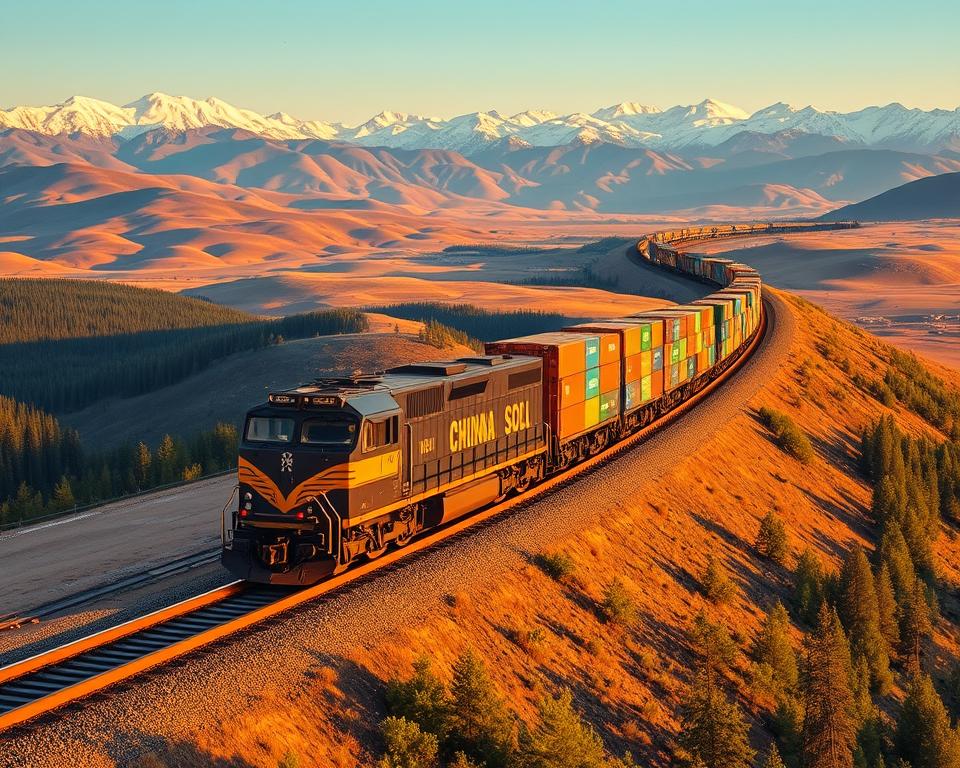
How China Shapes Cross-Border Connectivity
China is investing heavily in rail networks, strengthening ties with the world. This China–Europe rail service has surpassed 100,000 train runs, moving more than 11 million TEUs worth over $420 billion. This achievement creates new trade paths, enhancing competitive freight options and supporting sustainable development.
Benefits for Western Markets
Firms across Western economies reap rewards from this expanding trade network. They benefit from faster delivery, resilient logistics, and decreased emissions. This interconnected rail system presents a strategic option for firms aiming to enter new markets.
Background and Goals of the Belt and Road Initiative
The Belt and Road Videos Initiative is designed to open fresh trade corridors across Asia, Europe, and beyond. Its purpose is to lower shipping expenses and unlock additional markets for manufacturers and distributors. The strategy weaves together road, sea, and rail systems, stimulating infrastructure expansion and encouraging global collaboration.
The China railway express emerges as a crucial pillar of efficient cargo movement. Its priorities include funding advanced rail technology, upgrading customs procedures, and building strategic corridors. This strengthens the relationship between factories in the East and buyers in the West. It further results in smoother shipping operations and stimulates local economies with fresh business prospects.
China Europe Railway Express: Changing Long-Distance Logistics
Newly established freight-only rail corridors have introduced fresh possibilities for global trade. Companies now pursue faster deliveries and stronger connections between continents. The effort lowers unexpected holdups, redefining how cargo moves between Asian and European markets.
Bridging the Gap for Chinese Enterprises
Exporters from China gain a competitive edge by reaching European buyers. Routes such as Chongqing to Duisburg showcase how electronics, automotive parts, and other goods arrive in nearly half the time of sea transport. With fixed timetables, businesses can better plan their shipments, staying competitive in demanding markets.
Improving Cross-Border Efficiency
Upgraded customs procedures and fixed departure times simplify long-haul logistics. This transformation leads to faster turnaround times and more stable supply chains for companies. Shippers gain from easier coordination via groupage services and intermodal links. The China railway express to Europe emerges as a key asset, linking production centers with distribution hubs for swift commerce.
Key Advantages of the China–Europe Freight Rail Service
For companies seeking faster deliveries, the China–Europe freight route is an appealing choice. It bridges the gap between the slow pace of sea voyages and the high costs of air travel. Guided by the Belt and Road vision, new corridors support the speedy shipment of products such as electronics, cars, and raw materials to European markets.
Rail journeys typically take around 12–18 days, clearly outpacing sea freight. This speed is attractive to companies that prioritize quick delivery to meet customer needs. It supports consistent growth for manufacturers who want stable cross-border supply chains.
Shorter Transit Times
Briefer transit periods result in speedier order fulfillment. Such time savings support companies of all sizes by shrinking the gap between orders and replenishment.
Cost-Efficient Rail Freight Solutions
Shipping by train is about one-fifth the cost of air freight. It’s seen as a cost-effective way to maintain product quality. The Belt and Road initiative is strengthening partnerships and infrastructure, making cross-continental trade smoother.
Strategic Importance of the China–Europe Railway Express
This China Europe Express route forms a foundation of the China Belt and Road vision. It links manufacturers in Asia with importers in Europe, becoming crucial for handling sizable consignments. Covering 25 countries and over 50,000 kinds of goods, it offers trusted capacity for distribution networks.
For major companies, it offers a faster, eco-friendly alternative to traditional sea or air transport. It stabilizes logistics networks, supporting more accurate stock control and serving expanding customer bases. It functions as a major actor in international freight transport, cutting dependence on crowded routes.
- Time-sensitive deliveries that boost retail readiness
- Lower carbon emissions that support sustainable expansion
- Better inventory management for a wide range of sectors
European businesses now see new opportunities with the China Railway Express. Predictable routes and steady capacity unlock additional markets. This partnership strengthens trade while protecting logistics from global disruptions.
Eurasian Rail Routes and Cross-Border Expansion
China’s Belt and Road initiative creates new avenues by connecting manufacturing bases with expanding markets. The broad system encompasses seaports, roadways, and inland hubs. It delivers alternative paths that reduce journey lengths and stimulate commerce. This synergy boosts rail logistics, prompting companies to seek out quicker cargo options.
Important corridors including Xi’an to Hamburg and Chengdu to Lodz widen international reach for items such as electronics, garments, and industrial machinery. Cargo moves efficiently through integrated channels that combine trucking or barge services with rail. This approach reduces shipping costs and promotes eco-friendly practices.
Essential Intermodal Transport Hubs
Places like Xi’an in China and Hamburg in Germany serve as central hubs for diverse goods. These nodes accelerate distribution, embed digital tracking, and help resolve congestion challenges.
| Hub | Location | Key Commodities | Connectivity Advantage |
|---|---|---|---|
| Xi’an | China | Electronics, Apparel | Robust East-West Links |
| Hamburg | Germany | Machinery, Automotive Parts | Port Integration |
| Chengdu | China | Textiles, Consumer Goods | Rail-Road Collaboration |
| Lodz | Poland | Various Industrial Products | Strategic EU Entry Point |
How European Supply Chains Are Affected
Industrial firms enjoy cost reductions and shorter lead times, helping them distribute widely throughout Europe. This growth in rail-based logistics fits well with environmentally conscious strategies. It additionally creates realistic channels for continued trade development.
How Rail Logistics Strengthens International Trade
The China Europe Express train, a key part of the Belt and Road initiative, is revolutionizing freight options. It establishes cross-border connectivity, ensuring goods move smoothly between major markets. Large freight capacities keep goods moving regularly, aligning with increasing customer expectations.
Digital paperwork systems streamline customs processing across multiple nations. This optimization refines customs procedures, granting firms shorter clearance times and less friction. Live tracking systems increase visibility, allowing cargo owners to follow each key movement.
- Speedier border processing thanks to accurate and protected documentation
- Consistent freight schedules for stable inventory management
- Efficient transport that appeals to tech-oriented industries
These developments strengthen cross-border links, contain costs, and help meet strict deadlines. It’s now easier to access global markets without compromising on quality or reliability. Rail logistics is a game-changer for international trade, benefiting a wide range of sectors and consumer needs.
Challenges and Outlook for Worldwide Trade Links
Trade corridors continue to grow through new rail connections that join far-flung markets. The China Europe Express train, part of the China Belt and Road initiative, is reshaping global cargo movements. Checkpoints on Eurasian corridors must coordinate more closely to minimize waiting times and cope with increased demand.
Building Infrastructure for Sustainable Expansion
Differences in track gauge require cargo transfers at locations like Alashankou, adding time to the journey. These transfers require upgraded facilities and advanced tracking to ensure timely operations. The 95306 freight service platform supports better visibility, easing bottlenecks and promoting smoother cargo transfers.
Well-timed construction and corridor modernization open fresh opportunities for speedier and more eco-friendly logistics.
Deepening Cooperation with Belt and Road Enterprises from China
Cross-border pacts strengthen confidence among logistics providers and states. Combined efforts focus on stable customs policies and advanced technology that streamline long-distance freight. Close alliances with Chinese Enterprises support improved service standards and create more unified freight experiences along Eurasian routes.
This depth of cooperation lays the groundwork for steady progress and long-term trade advantages.
| Common Transport Hurdles | Potential Solutions |
|---|---|
| Varying Rail Gauges | Upgraded Transshipment Points |
| Time Delays at Borders | Digital Freight Platforms |
| Limited Cross-Border Coordination | Unified Customs Agreements |
The Role of Transcontinental Railway Service in Modern Commerce
In our highly connected era, long-distance rail routes are vital for firms seeking reliable freight solutions. This China Europe Express network forms one pillar of the China Belt and Road program. It supports efficient cargo movement across many nations. Michael Schumann of the German Federal Association for Economic Development and Foreign Trade describes it as a vital artery of global supply chains. It strengthens reliability and robustness in international trade flows, including during periods of disruption. European trade associations commend its steady performance, even with port congestion.
Building More Diverse Supply Chains
Cargo owners profit from a balanced mix of freight choices. This method reduces reliance on single transport modes. It opens new possibilities for firms to serve a broader global trade network. Costs, speed, and cargo safety give companies an edge in changing markets.
Navigating Regulatory Requirements
Customs regulations and packing guidelines sometimes delay cargo. Transparent guidelines and harmonized procedures simplify cross-border handoffs. Firms build confidence by partnering with operators that handle compliance efficiently. This promotes steady growth in various industries.
| Advantage | Outcome |
|---|---|
| Reliable Schedules | Predictable transit times boost customer satisfaction |
| Expanded Reach | Greater access for smaller exporters and importers |
Digital and Technological Progress in Rail Freight
Technological advances in the digital realm are unlocking fresh paths for international trade. The China Europe Express train, part of the China Belt and Road initiative, showcases the power of modern solutions. It boosts performance over extended transport corridors. Automated inspection equipment at border crossings increases accuracy, reducing wait times.
Modern scheduling algorithms likewise have an important impact. They reduce bottlenecks on heavily used lines, maintaining steady freight movement. Such developments emphasize the need for a forward-looking system that supports punctual shipments.
Modern transcontinental railway service leverages digital platforms like 95306. It offers real-time container tracking and streamlined customs pre-clearance. Clients can monitor freight progress and adapt their strategies if they see slowdowns. Such upgrades call attention to the value of maintaining a network focused on punctual, predictable transport.
- Digitized customs procedures for rapid entry
- Automated border inspections that reduce bottlenecks
- Smart scheduling tools that optimize train routing
Such transcontinental railway service significantly changes conventional freight practices. It fosters trust in a network built for growth and resilience. Worldwide merchants profit from deeper connections and steady technological progress.
Conclusion
As a major element of the Belt and Road Initiative, the China-Europe Railway Express has completed more than 100,000 runs. It has moved merchandise exceeding $420 billion in value. This rail line connects major markets, promoting green logistics and ensuring timely, secure delivery.
It serves as a strategic bridge between Asia and Europe. By linking key trade hubs, it offers effective freight forwarding solutions and supports intermodal transportation. Companies gain from shorter transit times and reduced costs.
Modern infrastructure and unified procedures enhance reliability. This makes the route a trusted choice for cross-border shipping. Robust collaborations between continents indicate that further growth lies ahead.
New technologies and steady upgrades are pushing fresh possibilities in global commerce. The railway remains a strong framework for expanded trade. It is shaping an era of steady progress, forging global ties.